How to Build a SaaS Product from Scratch: A Complete Startup Guide for 2026
A practical framework for validating, designing, building, launching and scaling a SaaS platform
iAppstack Editorial & Engineering Team
Digital Product, SaaS and Engineering Specialists
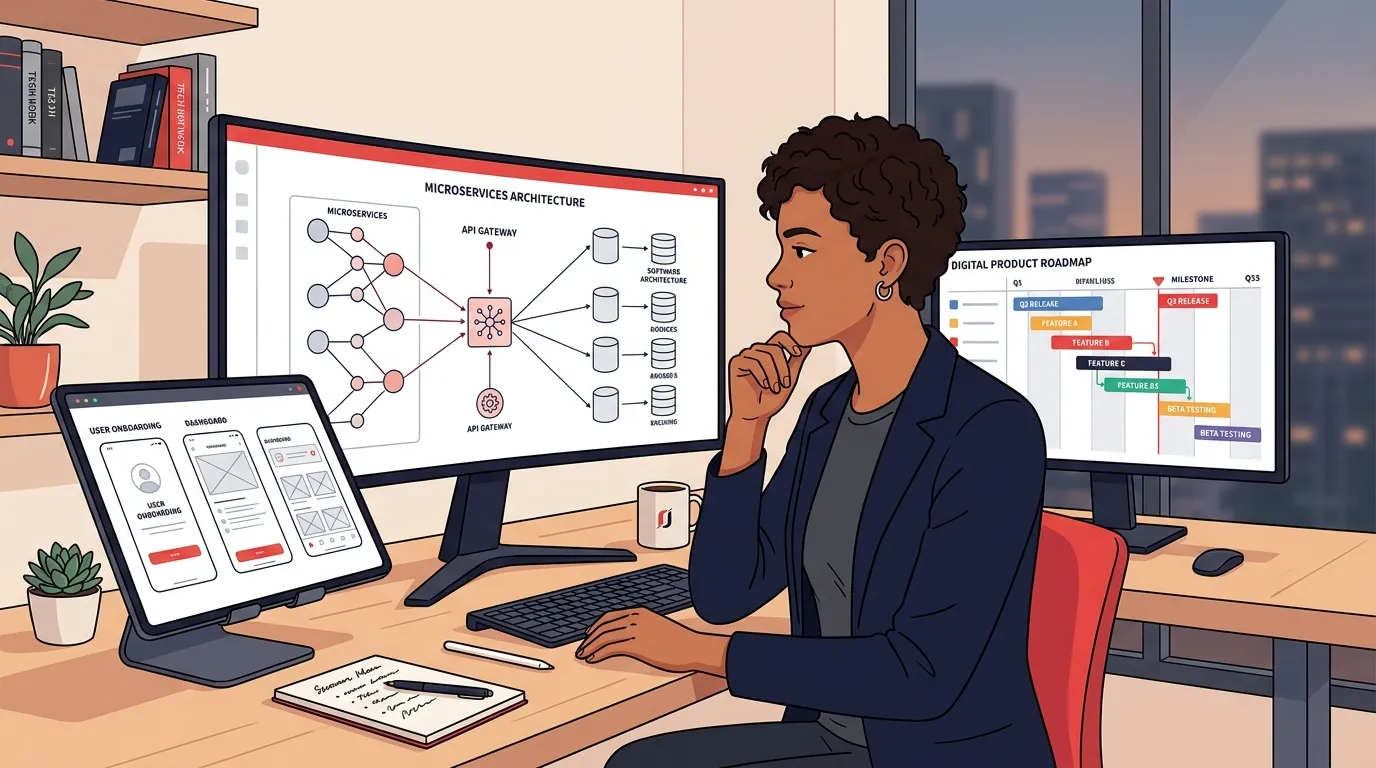
A SaaS product is a software application hosted in the cloud and delivered to customers over the internet. Its recurring revenue model can create predictable growth, but successful SaaS development depends on customer validation, a focused first release, reliable architecture and disciplined execution.
This guide explains how startup founders can move from an idea to a usable SaaS platform. The process is iterative: validate the problem, define the smallest valuable product, choose maintainable technology, test it with real users and scale only after core workflows prove dependable.
Why SaaS Products Are Popular
SaaS replaces many locally installed applications with centrally managed software. Customers can access a subscription from a browser or mobile app, while the provider controls releases, data infrastructure and support. This model gives providers recurring revenue and gives customers faster onboarding, regular updates and lower local administration.
The opportunity is significant, but competition is also high. A useful SaaS product must solve a recurring problem clearly and reduce time, cost or operational risk for a defined target audience.
What Is a SaaS Product?
A SaaS product is software as a service: users access a hosted application through a web browser or connected app, usually for a recurring fee. Common SaaS types include accounting systems, project management tools, customer relationship platforms, learning portals and operations dashboards.
Subscription model
Centralized management
Multi-user access
Operational visibility
1. Identify a Real Business Problem
Begin with interviews and direct observation rather than a feature-first assumption. Define the target users, current process, frequency of the problem and cost of unresolved work. Competitor research should identify both product gaps and user expectations; it should not lead to recreating every feature in a market.
Write a clear unique value proposition. For example: “Help operations teams prepare weekly reports without copying data between spreadsheets” is more actionable than “build a modern business intelligence platform.” Validation can include landing-page enquiries, manual workflow tests, interviews or a small paid pilot.
A useful validation note records who has the problem, how severe it is, how often it occurs, what users currently spend to solve it and why an existing method is inadequate. Speak to people outside your immediate network where possible. Founders can otherwise receive overly encouraging feedback from people who will not become regular paying users.
Market validation should also test willingness to adopt a new workflow. A user may say that reporting is inconvenient but continue relying on familiar spreadsheets. A pilot, short paid setup or measurable operational trial provides stronger evidence than a verbal interest statement.
2. Define SaaS Product Requirements
Translate the problem into user journeys and functional boundaries. Requirements should identify target roles, permissions, key screens, notification rules, subscription plans, payment behavior and reporting needs. Include non-functional requirements such as security, availability, accessibility, backup and expected usage.
- Target customer and primary user
- Authentication and role permissions
- Customer and administration dashboards
- Subscription and billing rules
- API and integration requirements
- Analytics, audit and reporting needs
- Privacy and data ownership
- Support and recovery processes
3. Start with an MVP
A SaaS minimum viable product should support one complete, valuable user journey rather than a shallow collection of features. Prioritize the workflow that demonstrates the product's benefit, and defer features until evidence shows they are needed.
Release in controlled stages, instrument important actions, collect structured feedback and verify that users complete the core workflow. An MVP is not a promise of poor quality: authentication, payment, permissions, backups and basic observability still need appropriate care.
4. Choose the Right Technology Stack
Web application
Backend
Database
Cloud infrastructure
For native mobile extensions, Flutter or React Native can share part of a cross-platform codebase. See mobile app development planning before extending a SaaS platform to mobile.
5. Plan SaaS Architecture
Multi-tenant SaaS applications serve several customer accounts from shared or isolated infrastructure. The design must prevent one account from reading or modifying another account's data. A tenant identifier should be enforced consistently across authorization rules, database queries and background jobs.
Security
Data
APIs
Single-tenant deployments may be appropriate for regulated or highly isolated customers, but they add infrastructure and operational cost. The tenancy model should follow actual business and compliance requirements rather than assumptions.
Architecture should be reviewed through practical scenarios: an expired subscription, a revoked user session, a failed payment, a deleted account or an interrupted background task. These scenarios determine whether authorization, billing, audit and recovery logic work together. They are not only database concerns.
Use the least privilege necessary for services and team access. Separate customer data, encryption keys, API credentials and backups according to the risks the product handles. Backups should be tested by restoring a copy in a controlled environment rather than being considered complete merely because a scheduled job succeeds.
6. Design UI/UX for Your SaaS Product
Map onboarding and daily workflows before drawing screens. UI/UX design should cover empty states, loading, validation, permissions, account setup and recovery. Responsive layouts, keyboard support, readable contrast and consistent navigation are more reliable than decorative complexity.
7. Develop Essential SaaS Features
Most SaaS platforms need account registration or invitation, authentication, user management, role-based access, subscription handling, notifications, account settings and reporting. Payment integrations, email providers and other services require clearly owned retry, reconciliation and failure processes.
Custom SaaS development should keep reusable domain logic separate from a particular interface or provider. This makes integrations and future capabilities easier to change.
8. Testing and Quality Assurance
Test important user journeys, API authorization, tenant isolation, payments, data migration and failure states. QA should also cover responsive browsers, accessibility, performance under expected load and security vulnerabilities. Automated tests help protect frequently changed workflows, while manual and exploratory testing can uncover usability problems and unusual combinations.
Quality planning should assign evidence to each critical requirement. A security requirement may need dependency checks and authorization tests; a reporting requirement may need data fixtures and reconciliation against source records. This makes QA a verification process rather than only a visual review.
9. Launch and Deploy Your SaaS Product
Production readiness includes domain and DNS configuration, TLS certificates, environment secrets, database migrations, automated backups, monitoring, error tracking and a rollback plan. Create a staged release process with release notes and operational ownership. Invite a limited user group before a wider launch when the product can benefit from controlled feedback.
10. Maintain and Scale the Product
Scaling is driven by evidence: slow queries, resource limits and failed jobs should guide investment. Improve indexing, caching and background processing before adding unnecessary infrastructure. Customer feedback, security updates and compatibility changes remain ongoing work after launch.
How Much Does SaaS Product Development Cost?
Cost depends on product complexity, number of modules, user roles, integrations, data migration, UI/UX scope, security, infrastructure, team composition and post-launch support. Custom reporting or regulated workflows may require substantially more engineering than a simple internal tool.
A reliable estimate requires requirements, constraints and acceptance criteria. It should show assumptions, deliverables, exclusions and how changes are approved rather than presenting an unsupported fixed price.
Founders should request a staged roadmap for discovery, MVP delivery and later improvements. This provides spending control while still leaving room for validated learning. Compare proposals on scope, technical approach and quality commitments, not on a headline price alone.
How iAppstack Helps Startups Build SaaS Products
iAppstack provides custom SaaS platform development, web application engineering, UI/UX design, backend and API development, database architecture, cloud deployment, quality assurance and ongoing maintenance. These capabilities can be combined for a startup's stage, with the appropriate scope confirmed during discovery.
Explore iAppstack's work, learn about the team, or discuss a SaaS project.
Conclusion
Building a SaaS product is a sequence of validated decisions. Start with a real customer problem, test a focused MVP and make deliberate choices about tenancy, security, billing and infrastructure. A careful approach gives founders more evidence and less avoidable risk before major investment.
Have a SaaS idea? Let's turn it into a scalable digital product with iAppstack.
Discuss Your SaaS IdeaFREQUENTLY ASKED QUESTIONS.
READY TO TURN YOUR IDEA INTO A DIGITAL PRODUCT?
Whether you're planning a mobile application, SaaS platform, or custom website, contact iAppstack to explore a suitable development approach.